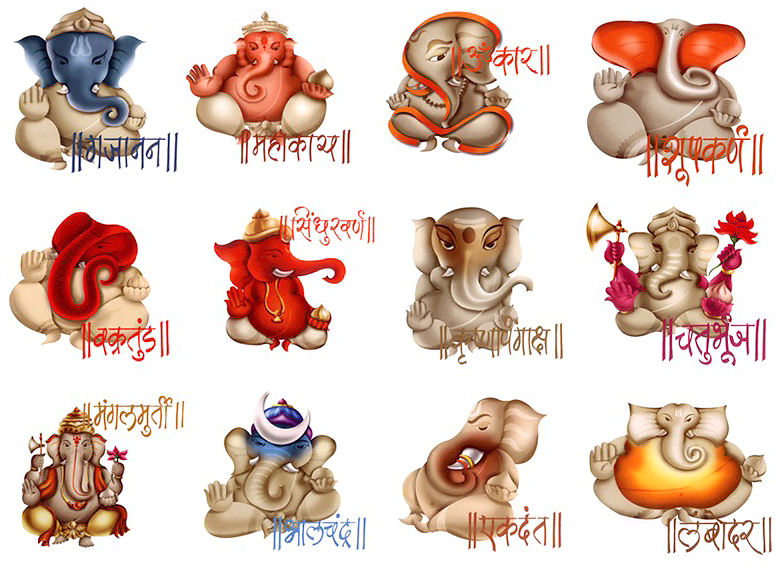
Ganpati Wallpaper

Vakratunda Mahakaya, Suryakoti Samaprabha Nirvighnam Kuru Mey Deva, Sarva Karyeshu Sarvada

History of Shree Hanuman

The story of the birth of Hanuman goes

Hanumanji Ashtothra Naamavali

Lord Hanuman Ashtothra Naamavali

God Hanumanji Aarti

Hanumanji Aarti

108 Names of Lord Hanuman

Names of Lord Hanuman

Saturday, 22 September 2012

Lord Ganesha and Kartikeya


Lord Ganesha and Lord Kartikeya is the son of Lord Shiva and Goddess Parvati. Lord Ganesha, being the elder son, was very intelligent and wise in nature. On the other hand, Lord Kartikeya was very impatient and short tempered. They both possessed different nature and different physical qualities, thus some time they had serious arguments or fight.

Once they had a serious argument on their strength and wisdom. So they approached to Lord Shiva for final settlement and justice. After hearing both of them Lord Shiva declared that among the two, who will first complete circling the universe would be the winner.

Without any delay Lord Kartikeya sat on his “Vahana”, the peacock, and started his journey round the universe travelling across the mountains, the sea and the rest universe. But big bellied Ganesha knew that with his “Vahana” the little rat, he can’t win the race. So he stopped and thought for a while. Suddenly he got an idea; he made Lord Shiva and Parvati to sit together and walked around them thrice. When Kartikeya returned after successfully completing his round, he saw Ganesha sitting in lap of his father. He could not understand why Ganesha is sitting rather than completing his task and blamed Ganesha for being unjust. Lord Ganesha told him that he had completed his round not once but thrice. Ganesha said his parents are his Universe, thus he proved himself by circling them. Lord Shiva was very pleased with Ganesha and boon him with the first one to be worshipped by people before starting any work. But Kartikeya lost his patience and thought that his father especially his mother was partial to him. He took a pledge, not to see any women face specially his mother face. He kept his words that’s why in many temples of Lord Kartikeya women’s are not allowed to enter.


Thursday, 20 September 2012

Legend of Ganesh Chaturthi


The mythological basis of the celebration is found in the Puranas. Parvati, while taking a bath, wanted somebody to guard from outside. She got the idea of making an idol out of the dirt that came from her body. She placed the idol outside. The idol did not even let her husband enter. Shankar became furious and instantly severed the head of the idol.

Parvati finished her bath and came out. She explained to her husband the reason for placing the idol before the door. The idol was her creation. In fact the idol was her son ("manas putra"), and consequently also Shankar's son.

Shankar felt sorry for what he had done. His servant Gan was standing nearby. Shankar ordered him to go and bring the head of the first living being he would meet. The servant saw an elephant, and he at once cut his head and took it to Shankar. Shankar joined the elephant's head to the body of Parvati's son. "Gaj" means elephant and "anan" means head, so Parvati's son became known as "Gajanan". Shankar made him the deity of his armies and thus his name became Ganesh.

Tuesday, 18 September 2012

Vinayagar Chaturthi 2012


Shendur Laal Chadhaayo Achchhaa Gajamukha Ko
Dondil Laal Biraaje Sut Gauriihar Ko
Haath Liye Guda Ladduu Saanii Sukhar Ko
Mahimaa Kahe Na Jaay Laagat Huun Pad Ko Jai Dev Jai Dev

Jai Jai Jai Jai Jai
Jai Jai Jii Ganaraaj Vidyaasukhadaataa
Dhany Tumhaaro Darshan Meraa Mat Ramataa Jai Dev Jai Dev
Jai Jai Jai ...

Bhaavabhagat Se Koii SharaNaagat Aave
Santati Sampatti Sabahii Bharapuur Paave
Aise Tum Mahaaraaj Moko Ati Bhaave
Gosaaviinandan Nishidin Gun Gaave Jai Dev Jai Dev
Jai Jai Jai ...

Ghaalin Lotaangan Vandiin Charan Dolyaannii Paahin Ruup Tujhe
Preme Aalingin Aananden Puujin Bhaaven Ovaalin MhaNe Naamaa
Tamev Maataa Pitaa Tamev Tamev Bandhushch Sakhaa Tvamev
Tamev Vidyaa DraviNm Tamev Tamev Sarvam Mam Dev Dev
Kaayen Vaach Manasendriyairvaa Buddhyaatmanaa Vaa Prakritisvabhaavaa
Karomi Yadyat Sakalam Parasmai NaaraayaNaayeti Samarpayaami
Achyut Keshavm Raamanaaraayanam Krishna Daamodaram Vaasudevam Hari
Shriidharam Maadhavam Gopikaavallabham Jaanakiinaayakam Raamachandram Bhaje
Hare Raam Hare Raam Raam Raam Hare Hare
Hare Krishna Hare Krishna Krishna Krishna Krishna Hare Hare

Thursday, 13 September 2012

Shree Panchmukhi Ganesha

Panchmukhi Ganesh means five headed Ganesha Pancha means Five and Mukhi means faced. The most relevant meaning of the five-headed Ganesh is certainly that these heads symbolize the five kosha in the subtile anatomy experienced. Thus, the fifth head of Ganesh symbolizes the highest level of yogic experience. Lord Ganesha has all the five elements under His control. He is the embodiment of all potency. No one is superior above him. This unique form of Ganesha is quite popular in south India.


Ganeshji Writing for Mahabharata

The Mahabharata is the longest epic of the world, written in Sanskrit and consisting about 1,00,000 shloka and 1.8 million words. The epic of Mahabharata was written by great poet Sage Vyasa with blessings and suggestion of Lord Brahma. Vyasa asked Lord Brahma to suggest him someone very intellectual and understanding to write down the epic, as both composition and writing of such great epic was not an easy task. Therefore on recommendation of Brahma Vyasa prayed and requested Lord Ganesha, also known as "Lord of knowledge" to write it down. Lord Ganesha agreed on one condition that his pen shouldn't stop even for second once he starts writing the composition as he had lots of other work to do. For this Vyasa in return put one condition before Ganesha to write the whole epic only after understanding the meaning of each and every word. In this way they made an agreement whith each other that, once started neither Vyasa would stop his dictating nor Gansha will write without understanding. It is been said that whenever Ganesha was too fast in writing, Vyasa used to dictate him some difficult composition. So that Ganesha would take time to understand and in this meantime Sage Vaysa used to compose new lines. In this way The Great Epic of Mahabharata was composed and written.


Wednesday, 12 September 2012

Elephant Face for Ganesha


Once Lord Shiva went to forest for atonement leaving Parvati behind all alone at home. Parvati decided to take bath one day but was worried as there was no one around her to look after the house and stop anyone to enter the house. There for she created a boy from the sandal paste applied on her body and permeate life into it. She instructed the boy to stand at the door and not to allow anyone enter the house. The boy with respect and dutifully followed the order of Parvati and stopped everyone to enter the house.

Soon Lord Shiva returned home. He was very surprised to see a stranger denying him to enter the house. Lord Shiva lost his patience and strike off the boy’s head with his Trishula. When Pravati came out, she broke down in pain seeing headless body of the boy. She asked Lord Shiva to reinstate the boy life but unfortunately the head was tossed very far by the power of Trishula. Lord Shiva realize his mistake and order his celestial armies “Gana” to get the head of first living being he come across, But its head should must be facing north.

Gana without delayed rushed to jungle and found a sleeping elephant facing north. They cut off his head and handed it to Lord Shiva. Lord Shiva fixes the head on the body and infused life into him. Lord Shiva made him the leader of his celestial army. From there on he was named as Ganapati, head of the celestial army was supposed to be worshiped first by everyone before starting any new venture.


Mushak of Lord Ganesha Vehicle


There is a very interesting story behind how a mouse became Lord Ganesha’s Vahana or vehicle. Once there was a demon named Gajamugasurana. He was a great disciple of Lord Shiva. Pleased with his devotion Lord Shiva blessed him with several boons, which made him very powerful but proud and dominating. He started troubling Gods by forcing them to do 1008 Theoppukaranams (sit ups done holding both ears with cross hands) thrice a day.

Tired and helpless, the Gods asked Lord Shiva to overcome with this problem. Lord Shiva asked Lord Ganesha and sent him with numerous weapons to fight with demon. As the demon was blessed with the boon that none of the weapons can cause any harm to him, all the attempts made using weapons to kill the demon went in vein. Lord Ganesha broke his right tusk to overcome the demon. Gajamugasurana assumed himself as a small mouse and run towards Lord Ganesha. Lord Ganesha very wisely controlled him and sat on him crushing his proud and ego. The defeated Gajamugasurana apologized and bowed before Lord Ganesha for mercy. Since then Gajamugasurana always escort Lord Ganesha as his Vahana.

Ganesh Chaturthi Celebration


Ganesh Chaturthi is celebrated on the birthday of Lord Ganesh (Ganesha), the god of wisdom and prosperity on the fourth day of the moons bright fortnight, or period from new moon in the lunar month of Bhadrapada. The celebration of Ganesh Chaturthi continue for five, seven, or ten days. Some even stretch it to twenty one days, but ten the most popularly celebrated. In the tradition of the right hand path the first day is the most important. In the left hand path tradition the final day is most important.

Ganesha is the god of wisdom and prosperity and is invoked before the beginning of any auspicious work by the Hindus. It is believed that for the fulfillment of one's desires, his blessing is absolutely necessary. According to the mythology, he is the son of Shiva and Parvati, brother of Kartikeya - the general of the gods, Lakshmi - the goddess of wealth and Saraswati-the goddess of learning. There are numerous stories in Hindu mythology, associated with the birth of this elephant-headed god, whose vehicle is the Mooshak or rat and who loves Modaks (droplet shaped Indian sweet).

Legend has it that Parvati created Ganesha out of the sandalwood dough that she used for her bath and breathed life into him. Letting him stand guard at the door she went to have her bath. When her husband, Shiva returned, the child who had never seen him stopped him. Shiva severed the head of the child and entered his house. Parvati, learning that her son was dead, was distraught and asked Shiva to revive him. Shiva cut off the head of an elephant and fixed it on the body of Ganesha.

Another tale tells of how one day the Gods decided to choose their leader and a race was to be held between the brothers- Kartikeya and Ganesh. Whoever took three rounds of the earth first would be made the Ganaadhipati or the leader. Kartikeya seated on a peacock as his vehicle, started off for the test. Ganesh was given a rat, which moved swiftly. Ganesh realised that the test was not easy, but he would not disobey his father. He reverently paid obeisance to his parents and went around them three times and thus completed the test before Kartikeya. He said, " my parents pervade the whole universe and going around them, is more than going round the earth." Everybody was pleasantly surprised to hear Ganesha's logic and intelligence and hence he came to be known as the Ganaadhipati or leader, now referred to as Ganpati.

There is also a story behind the symbolic snake, rat and the singular tusk. During one of his birthdays, His mother, Parvati, cooked for him twenty-one types of delicious food and a lot of sweet porridge. Ganesha ate so much that even his big belly could not contain it. Mounting his little mouse, he embarked on his nightly rounds. His mouse suddenly stumbled upon seeing a huge snake. To adjust His belly, Ganesha put the snake on as a belt around his stomach. All of a sudden, he heard laughter emanating form the sky.

He looked up and saw the moon mocking him. Ganesha infuriated, broke off one of his tusks and hurled it at the moon. Parvati, seeing this, immediately cursed the moon that whoever looks at it on Ganesh Chaturthi will be accused of a wrong doing. The symbology behind the mouse and snake and Ganesha's big belly and its relationship to the moon on his birthday is highly philosophic. The whole cosmos is known to be the belly of Ganesha. Parvati is the primordial energy. The seven realms above, seven realms below and seven oceans, are inside the cosmic belly of Ganesha, held together by the cosmic energy (kundalini ) symbolized as a huge snake which Ganesha ties around Him. The mouse is nothing but our ego. Ganesha, using the mouse as a vehicle, exemplifies the need to control our ego. One who has controlled the ego has Ganesha consciousness or God-consciousness.

Sunday, 9 September 2012

Ganesh Images


Aum shri ganeshaya namah
This mantra is usually taught to children for their good education. It increases their memory power, and they become successful in their examinations. Of course, people of any age may use this mantra when taking courses in a school or university, and for success in attaining their degree.


Ganesh Picture


"Aum gam ganapataye namah"
This is a mantra from Ganapati Upanishad. One may always use it before beginning a journey, a new course in school, new career or job, or before entering into any new contract or business so that impediments are removed and your endeavor may be crowned with success.


Ganpati Wallpaper


"Vakratunda Mahakaya, Suryakoti Samaprabha
Nirvighnam Kuru Mey Deva, Sarva Karyeshu Sarvada"


Saturday, 8 September 2012

Names of Ganeshji


Ekadant (one-toothed) 


To scribe the Mahabharat Katha Ganeshji removed one of his tusks to carve a quill from it. He then scribed the epic on palm leaves as the sage Ved Vyas recited it. The scribing took three years!In south India there is a belief that when ploughing first began on earth, it was Lord Ganeshji who first ploughed using one of his tusks

In the Uttar Ramayan, Brahmand Puran and Padma Puran there is a reference of a battle between Ganeshji and Parshuram. During the duel, the latter's axe fractured one of Ganeshji's tusks According to the Brahmand Puran, it was his left tusk.

There are other names related to his body and virtues.

A few commonly known are listed below: 

Lambodar - from the long - 'lambo', tummy - 'udar'.

Gajkarna - from the large elephant 'Gaja' ears - 'karna.'

Kapil - from his ruddy complexion.

Vikat - heavy-bodied.

Bhalchandra - having a Chandra (moon) on his forehead - 'bhal.

Dwaimatur - one who has 'dwi' - two, 'mata' - mother; Parvati - who gave birth to him and Malini - a demoness who nurtured him

Vakratund - one who breaks the ego of he who behaves anti-socially ('Vakra').

Mudgal - In south India, a special 'Mudgal Puran' extols Ganapati's glory. It cites 32 names, while 'Shardatilak' lists 51 names.

Vigneshwar - One who removes mayic obstacles - 'vignas'

Ganesh History


Ganesh Birth 

Once Lord Shiva left his usual dwelling on Mt.Kailas in the Himalayas, to meditate in one of the caves in the same mountain. Two friends of Parvati, his consort, suggested that she should have a 'gana' - attendant of their own, since they were not too happy with Shivaji's 'ganas'. Parvati agreed. Soon after, using her divine powers, she created a son, naming him Vinayak. She instructed him to guard their home.

When Shivaji returned Vinayak prevented him from entering. After some bickering, Shivaji beheaded Vinayak with his 'trishul' (trident). When Parvati heard of this she lamented intensely. Shivaji realised his error. To set things right he sent his men to the forest to fetch the head of the first living thing they met. They encountered a baby elephant and returned with its head. With his divine power, Shivaji placed the head over his son's body. Instantly Vinayak sprung to life. Henceforth Vinayak also earned the name of Gajaanan. 'Gaja' means elephant. Shivaji blessed him with a boon that people would first worship and offer him dedication in all their auspicious activities. Those who didn't would not attain success.

Bhadarva Sud 4th is the day Parvati was offering the final pujan to the dead Ganeshji, when he resurrected.

Friday, 7 September 2012

Ganesha Asthakam


Yatho anantha shakthir anathascha jeeva,
Yatho nirgunadha aprameyaa gunasthe,
Yatho bhathi saravam tridha bedha binnam,
Sada tham Ganesam namamo bhajama. 1

Yathaschaviraseej jagath sarvametha,
Thadhabjasano viswgo viswagoptha,
Thandendradhayo deva sanga manushya,
Sada tham Ganesam namamo bhajama. 2

Yatho vahni bhanu bhavo bhoor jalam cha,
Yatha sagaraschandrama vyoma vayu,
Yatha sthavara jangama vruksha sangha,
Sada tham Ganesam namamo bhajama. 3

Yatho dhanava, kinnara yaksha sangha,
Yatha scharana varana swapadascha,
Yatha pakshi keeta yatho veerudasha,
Sada tham Ganesam namamo bhajama. 4

Yatho budhir ajnananaso mumukshor,
Yatha sampadho bhaktha santhoshika syu,
Yatho vigna naso, yatha karya sidhi,
Sada tham Ganesam namamo bhajama. 5

Yatha puthra sampadhyatho, vanchithartho,
Yatho abhakthi vignasthadha anekaroopa,
Yatho soka mohaou yatha kama eva,
Sada tham Ganesam namamo bhajama. 6

Yatho anantha shakthi sasesho bhabhoova,
Dharadhararenakaroope cha shaktha,
Yatho anekadha swargalolka hi nana,
Sada tham Ganesam namamo bhajama. 7

Yatha veda vacho vikunta manobhi,
Sada nethinetheeti yatha gunanthi,
Para brahma roopam chidananda bhootham,
Sada tham Ganesam namamo bhajama. 8

Ganesha Pancharatnam Stotram


Pancharatnam Stotram


Mudakaraatha Modakam Sada Vimukti Saadhakam
Kalaadharaavatamsakam Vilasiloka Rakshakam
Anaaya Kaika Naayakam Vinasitebha Daityakam
Nataasubhasu Naashakam Namaami Tham Vinaayakam. 1

Natetaraati Bheekaram Navoditaarka Bhaasvaram
Namat Suraari Nirjanam Nataadhi Kaapa Duddharam
Suresvaram Nidheesvaram Gajesvaram Ganeshvaram
Mahesvaram Samaasraye Paraatparam Nirantaram. 2

Samasta Loka Samkaram Nirasta Daitya Kunjaram
Daredarodaram Varam Vare Bhavaktra Maksharam
Krupaakaram Kshamaakaram Mudaakaram Yasaskaram
Manaskaram Namaskrutaam Namaskaromi Bhaasvaram. 3

Akimchanaarti Marjanam Chirantanokti Bhaajanam
Puraari Poorva Nandanam Suraari Garva Charvanam
Prapancha Naasha Bheeshanam Dhananjayaadi Bhushanam
Kapola Daana Vaaranam Bhajaey Puraana Vaaranam. 4

Nitaantikaanta Dantakaanti Mantakaanta Kaatmajam
Achintya Rupa Mantaheena Mantaraaya Krintanam
Hrudantarey Nirantaram Vasantameva Yoginam
Tameka Danta Meva Tam Vichintayaami Santatam. 5

Mahaaganesha paJncharatnam aadarena yon.avaham
Prajalpati prabhaatake hridi smaran ganeshvaram
Arogataam adoshhataam susaahitiim suputrataam
Samaahitaayurashhta bhuutimabhyupaiti sochirat ...6

Ganapati Atharvashirsha


Om Namste Ganpataye
Tvameva Pratyaksham Tatvamasi
Tvamev Kevalam Kartasi
Tvamev Kevalam Dhartasi
Tvamev Kevlam Hartasi
Tvamev Sarvam Khalvidam Bramhasi
Tvam Sakshadatmasi Nityam || 1 ||


Rritam Vachmi
Satyam Vachmi || 2 ||


Ava tvam Mam
Ava Vaktaram
Ava Shrotaram
Ava Dataram
Ava Dhataram
Avanuchanamv Shishyam
Ava Paschatat
Ava Purastat
Avo Uttaratat
Ava Dakshinatat
Ava chordhvatat
Ava Dharatat
Sarvatomam Pahi Pahi Samantat || 3 ||

Tvam Vangmayastvam Chinmaya
Tvam Anandmayastvam Bramhamaya
Tvam Sachitananda Dvitiyosi
Tvam Pratyaksham Bramhasi
Tvam Jnanmayo Vijnanamayo Asi || 4 ||


Sarvam Jagadidam Tatvo Jayate
Sarvam Jagadidam Tvat Sti Shastati
Sarvam Jagadidam Tvay Layamesyati
Sarvam Jagadidam Tvayi Pratyeti
Tvam Bhumi Rapo Nalo Nilo Nabha
Tvam Chatvarim Vak Padaini || 5 ||


Tvam Guna Traya Atitaha
Tvam Deha Treya Atitaha
Tvam Kala Treya Atitaha
Tvam Avastreya Atitaha
Tvam Muladhar Stiti Yosi Nityam
Tvam Shakti Treya Atmakaha
Tvam Yogino Dhayayanti Nityam
Tvam Bramhastvan, Vishnustvam, Rudrastvam, Indrastvam Agnistvam, Vayustvam, Suryastvam, Chndramastvam, Bramha Bhur Bhuva Svorom || 6 ||

Ganadim Purvamuccharaya Varnadim Tada Nantaram
Anusvara Paratarah
Ardhendu Lasitam
Taren Hridam
Etatva Manu Svarupam
Gakarah Purva Rupam
Akaro Madhyam Rupam
Anu Svaraschantya Rupam
Bindu Ruta Rupam
Nadah Sandhanam
Sagm Hitaa Sandihi
Sesha Ganeshvidhya
Ganal Rishi; Nichrud Gayatri chandah
Ganpatir devata
Om 'GUNG' Ganpataye Namah || 7 ||


Ek Dantaya Vid Mahe vakra Tundaya Dhimahi
Tanno danti Prachodayat || 8 ||

Ek Dantam Chatur Hastam Pashmam Kusha Dharinam
Radamch Vardam Hastair Bhi Bhranum Mushaka Dhvajam
Raktam Lambodaram Shoorpakarnkam Rakta Vasasamam
Raktam Gandhanu Liptangam Rakta Pushpaihi saupujitam
Bhaktanu Kampinam Devam Jagat Karnam Achutam
Avir Bhutam Cha Shrasta Yadao, Prakruthe Purushat Param
Evam Dhayayati Yo Nityam, Sa Yogi Yoginam Varah || 9 ||

Namo Vrat Pataye, Namo Ganapataye
Namo Pramatha patye, Namste Stu Lambodaraya Ekdantaya, Vighna Nashine Shiv Sutaya, Sri Varad Murtiye Namo Namah || 10 ||

Wednesday, 5 September 2012

Shree Ganesh | Sankat Nashan Stotra

Sankat Nashan Stotra


TaPranamya ShirsaDevam GauriPutra Vinayakam
Bhaktavasam SmareNityam AyuhuKamartha Siddhaye..1


Prathamam Vakratundamcha Ekdantam Dwitiyakam
Tritiyam KrishnaPingaksham GajaVakram Chaturthakam..2


Lambodarm Panchamam cha Shashtham Vikatmeva cha
Saptam VighnaRajendram Dhumravarnam Tathashtakam..3


Navam Bhalachandram cha Dashmamtu Vinayakam
Ekadasham Ganapatim Dwadasham tu Gajananam..4


Dwadashaitani Namani TriSandhyai Yah Pathennarh
Na cha Vigna Bhayam Tasya sarva Siddhi Karam Prabho..5


Vidyarthi Labhate Vidyam, Dhanarthi Labhate Dhanam
Putrarthi Labhate Putram, Moksharthi Labhate Gatim..6


Japed Ganapati Stotram Shadbhir Masaihi Falam Labhet
Samvastarena Siddhim cha Labhate natra Sanshayh..7


Ashtobhyo BhahmaneBhyascha Likhitva Yah Samarpayet
Tasya Vidya Bhavet Sarva Ganeshsya Prasadatah. ..8

Tuesday, 7 August 2012

Shri Krishna 108 Names with Meaning


NAMESMEANING
AchalaStill Lord
AchyutaInfallible Lord
AdbhutahWonderful God
AdidevThe Lord Of The Lords
AdityaThe Son Of Aditi
AjanmaOne Who Is Limitless And Endless
AjayaThe Conqueror Of Life And Death
AksharaIndestructible Lord
AmrutOne Who Is Sweet As Nectar
AnaadihOne Who Is The First Cause
AnandsagarCompassionate Lord
AnantaThe Endless Lord
AnantajitEver Victorious Lord
AnayaOne Who Has No Leader
AniruddhaOne Who Cannot Be Obstructed
AparajeetThe Lord Who Cannot Be Defeated
AvyuktaOne Who Is As Clear As Crystal
BalgopalThe Child Krishna, The All Attractive
BaliThe Lord Of Strength
ChaturbhujFour-Armed Lord
DanavendraGranter Of Boons
DayaluRepositiory Of Compassion
DayanidhiThe Compassionate Lord
DevadidevThe God Of The Gods
DevakinandanSon Of Mother Devaki
DeveshLord Of The Lords
DharmadhyakshaThe Lord OF Dharma
DwarkapatiLord Of Dwarka
GopalOne Who Plays With The Cowherds, The Gopas
GopalpriyaLover Of Cowherds
GovindaOne Who Pleases The Cows, The Land And The Entire Nature
GyaneshwarThe Lord Of Knowledge
HariThe Lord Of Nature
HiranyagarbhaThe All Powerful Creator
HrishikeshThe Lord Of All Senses
JagadguruPreceptor Of The Universe
JagadishaProtector Of All
JagannathLord Of The Universe
JanardhanaOne Who Bestows Boons On One And All
JayantahConqueror Of All Enemies
JyotiraadityaThe Resplendence Of The Sun
KamalnathThe Lord Of Goddess Lakshmi
KamalnayanThe Lord With Lotus Shaped Eyes
KamsantakSlayer Of Kamsa
KanjalochanaThe Lotus-Eyed God
KeshavaOne Who Has Long, Black Matted Locks
KrishnaDark-Complexioned Lord
LakshmikantamThe Lord Of Goddess Lakshmi
LokadhyakshaLord Of All The Three Lokas (Worlds)
MadanThe Lord Of Love
MadhavaKnowledge Filled God
MadhusudanSlayer Of Demon Madhu
MahendraLord Of Indra
ManmohanAll Pleasing Lord
ManoharBeautiful Lord
MayurThe Lord Who Has A Peacock Feathered-Crest
MohanAll Attractive God
MuraliThe Flute Playing Lord
MurlidharOne Who Holds The Flute
MurlimanoharThe Flute Playing God
NandgopalaThe Son Of Nand
NarayanaThe Refuge Of Everyone
NiranjanaThe Unblemished Lord
NirgunaWithout Any Properties
PadmahastaOne Who Has Hands Like Lotus
PadmanabhaThe Lord Who Has A Lotus Shaped Navel
ParabrahmanaThe Supreme Absolute Truth
ParamatmaLord Of All Beings
ParampurushSupreme Personality
ParthasarthiCharioteer Of Partha – Arjuna
PrajapatiLord Of All Creatures
PunyahSupremely Pure
PurshottamThe Supreme Soul
RavilochanaOne Who Eye Is The Sun
SahasraakashThousand-Eyed Lord
SahasrajitOne Who Vanquishes Thousands
SahasrapaatThousand-Footed Lord
SakshiAll Witnessing Lord
SanatanaThe Eternal Lord
SarvajanaOmniscient Lord
SarvapalakaProtector Of All
SarveshwarLord Of All Gods
SatyavachanaOne Who Speaks Only The Truth
SatyavrataThe Truth Dedicated Lord
ShantahPeaceful Lord
ShreshtaThe Most Glorious Lord
ShrikantaBeautiful Lord
ShyamDark-Complexioned Lord
ShyamsundaraLord Of The Beautiful Evenings
SudarshanaHandsome Lord
SumedhaIntelligent Lord
SureshamLord Of All Demi-Gods
SwargapatiLord Of Heavens
TrivikramaConqueror Of All The Three Worlds
UpendraBrother Of Indra
VaikunthanathaLord Of Vaikuntha, The Heavenly Abode
VardhamaanahThe Formless Lord
VasudevAll Prevailing Lord
VishnuAll Prevailing Lord
VishwadakshinahSkilfull And Efficient Lord
VishwakarmaCreator Of The Universe
VishwamurtiOf The Form Of The Entire Universe
VishwarupaOne Who Displays The Universal Form
VishwatmaSoul Of The Universe
VrishaparvaaLord Of Dharma
YadavendraKing Of The Yadav Clan
YogiThe Supreme Master
YoginampatiLord Of The Yogis

Shri Krishna


Once upon a time there lived an evil, wicked and ambitious king by name of Kamsa in Mathura. He plundered the kingdom left and right and lawlessness prevailed in his state. On one of the days a heavenly prophecy from the sky came and echoed, “Kamsa! Your end is near! The eighth son of Devaki, your sister, will be the one responsible for your death.” Kamsa was enraged beyond control and imprisoned Devaki, his sister and Vasudeva her husband. Then he killed every child of the couple as they were born. But just the midnight when the eighth child was born, the skies roared and Lord Vishnu advised Vasudeva to take the child across the river Yamuna to the other side to the village of Gokul and exchange with the daughter of Yashoda in Gokul, who was born on the same day. Vasudeva accordingly put the child in a basket, and as he went out the doors of the prison parted for him as if in a magic. The river parted into two to allow for Vasudeva to cross. Vasudeva then crossed into Gokul and exchanged his son with the daughter of Yashoda who was born the same day and came back. The baby uttered cries which awakened Kamsa, and then happily he went to the prison chamber and snatched the girl baby and as he lifted her in the air, the baby, who was an incarnation of the Devi herself, laughed in glee “Kamsa, your real enemy is still alive. The son of Devaki is alive and well and will come back to kill you”, and then disappeared. Kamsa was outraged beyond wits and started a killing spree of all boys at that age in his kingdom. It was a terror outbreak.
Krishna led a very pampered and amorous life in the Gokul, along side thousands of gopikaas, the cowherdesses who were all entralled at his beauty and were thrilled whenever he played the flute. There are numerous playful instances of Krishna, playing mischief with the gopikaas including breaking their butter pots. Many a poets, literarians have described these amorous and mischievious acts as Raas-Lila of Krishna. Among all the gopikaas, one Radha was special to Krishna. There are numerous amorous tales of Radha and Krishna together. Krishna is also known to be a very mischievious child who annoyed Yashoda a lot. A lot of dohas (poems) described by Mirabai, an ardent devotee of Krishna, are very popular which describe the naughty acts of Krishna. Among them the one titled “Maiya Mori Main nahi makhan khayo” is an all-time favourite. It describes the excuses which Krishna gives to his mother yashoda explaining that he was not responsible for stealing of the butter from the gopikaas.
Krishna incarnated in this world to eliminate evil elements from this world. There are numerous tales of his bravery since his childhood. Many of the stories are related to the attempts by Kamsa, to kill Krishna after Kamsa came to know that Krishna was in Gokul alive. Some of the tales are given below
As Krishna grew older he left the heavenly Gokul, and the idyllic life alongside Gopis, to go and kill Kamsa. He killed Kamsa, and then settled in Dwaraka along with his brother Balram and learnt the traditional arts of fighting including archery. He arbitrated in the fight between the Pandavas and Kauravas in Mahabharata. During the war he is well known for his monologue to Arjuna on the battlefield, which is together termed as the Bhagvad Gita. There are many stories of Krishna, starting from his childhood to his death including his role in Mahabarata war, his rule over Dwaraka, his childhood amorous acts with gopikaas including Radha, his winning of wives like Satyabhama etc.

Sunday, 5 August 2012

Shiva Panchakshari Stotra


Panchakshari Stotram

Nagendra Haaraaya Thrilochanaaya Bhasmaanga Raagaaya Maheshvaraaya Nityaaya Suddhaaya DigambaraayaTasmai 'Na' kaaraaya Namah Shivaaya II1II
Mandaakini Salila Chandana Chaarthitaaya Nandeesvara Pramatha Naatha Mahesvaraaya Mandaara Pushpa Vahu Pushpa Supoojitaaya Tasmai 'Ma' kaaraaya Namah Shivaaya II2II
Shivaaya Gauri Vadana AravindaSooryaaya Dakshaadhvara Naashakaaya Sree Neelakantaaya Vrisha Dhvajaaya Tasmai 'Shi' kaaraaya Namah Shivaaya II3II
Vasishta Kumbhodbhava Gautamaaya Muneendra Devaarchita Sekharaaya Chandraarka Vaishvaanara Lochanaaya Tasmai 'Va' kaaraaya Namah Shivaaya II4II
Yajna Swaroopaaya Jataadharaaya Pinaaka Hasthaaya Sanaatanaaya Divyaaya Devaaya DigambaraayaTasmai 'Ya' karaaya Namah Shivaaya II5II
Panchaaksharam Idam PunyamYah Pateh Shiva Sannidhau Shivaloka Mavaapnothee Shivena Saha Modate